
Summarize this article with:
Sommaire
As long as volumes remained modest, a shared Excel file was enough to track the status of an order. But as soon as a shipper requests the status of a pallet in real time—at any hour—the spreadsheet reveals its limitations: static data, manual re-entry, and discrepancies between versions.
Real-time logistics traceability is no longer just a convenience; it has become an essential prerequisite for continuous and instant visibility.
Who’s demanding it? Shippers, who are increasingly under pressure from internal risk management and/or driven by their own customers.
What? End-to-end product tracking, from receipt to delivery.
Where and when? At every stage of the supply chain, in real time.
How can this be achieved in practice? With a WMS connected to the rest of the supply chain. Here’s what this means for your operations.
Why are shippers now demanding full traceability?
This requirement isn’t a whim; it responds to fundamental changes in the logistics and transportation sector.
One key reason is the demand for instant visibility into logistics flows. With the rise of e-commerce and distribution platforms, shippers want to track every logistics flow in real time, without having to follow up with their service provider.
They expect self-service access to up-to-date and reliable information: a supply chain management system that is as efficient as possible.
A second reason is regulatory compliance. Traceability operates within a specific framework designed to ensure product safety: health compliance, recall management, and obligations specific to regulated sectors such as food and pharmaceuticals.
Tracing a product’s origin and journey throughout its entire lifecycle—supported by labeling and shipping documents—has become both a mark of professionalism and a legal requirement.
Third, there has been a marked increase in demand for transparency regarding logistics status. Shippers are no longer satisfied with a simple “shipped/delivered” status. They expect details on every step of the process:
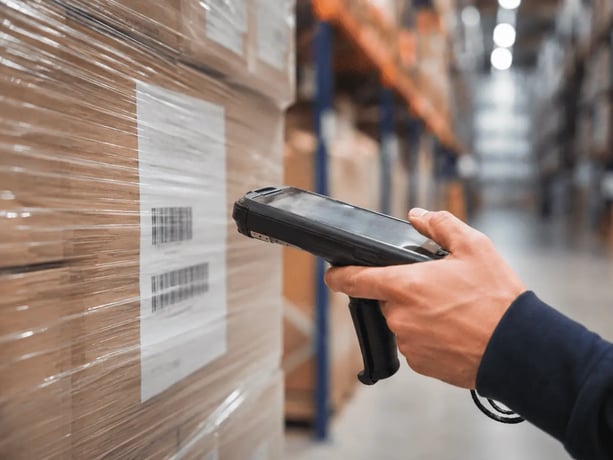
- Receipt and inspection of goods via barcode,
- Storage setup and inventory management,
- Order fulfillment,
- Shipping with lot number, label, and date,
- Proof of delivery.
- Fewer disputes,
- Improved service quality and data accuracy,
- better risk management,
- and performance management both internally and with customers.
Finally, end customers are better informed today than they were a few years ago. End consumers already track their packages in real time on a daily basis. This level of expectation automatically trickles up: from the end customer to the manufacturer, and then from the manufacturer to its logistics provider. What is standard for the general public has become the norm in B2B.
How does a WMS ensure real-time traceability in the warehouse?
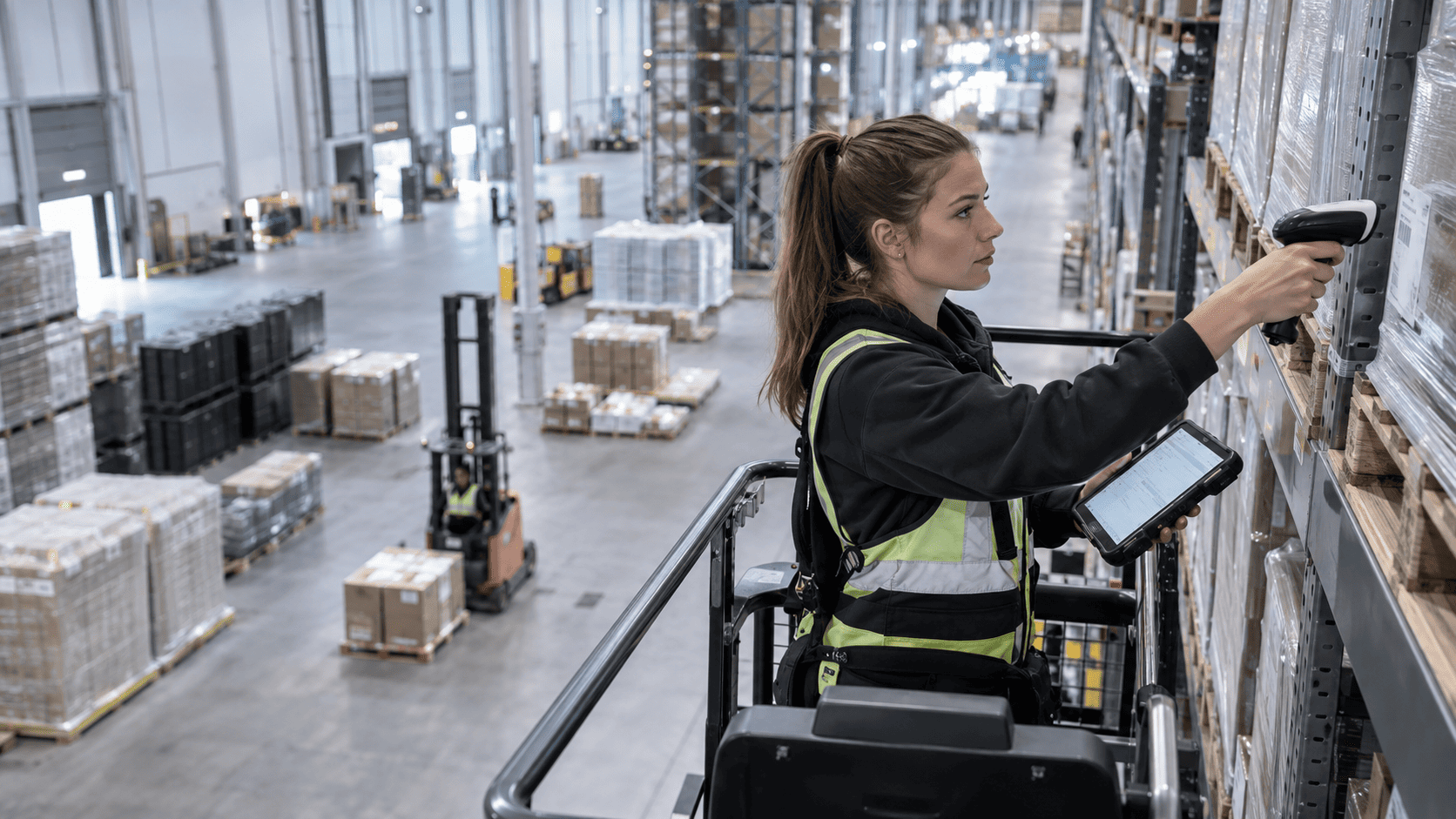
Ensuring traceability requires reliable data captured at the source. This is the role of a WMS (Warehouse Management System): this solution, a true traceability system, transforms every physical movement into actionable data in real time.
This traceability is not just information; it has become a service demanded by customers just as much as price or delivery time.
From tracking the item to the package to the pallet
Each unit is identified and linked to its container. An item (via its SKU and barcode, or sometimes an RFID tag) is linked to a package, which is in turn linked to a pallet.
This identification process allows you to trace items up or down the supply chain at any time: from a pallet to the items it contains, or from an item to the shipment it is part of. From storage to shipment, each item remains linked to its original labeling.
As a result, locating a specific batch takes just a few seconds—not half a day of sifting through documents and shipping slips. That’s the whole point of real-time product tracking with no blind spots.
Operations Management KPIs
Traceability isn’t just about locating goods. It feeds into dashboards that measure the health of the operation and its processes: service levels, order fulfillment error rates, out-of-stock rates, processing times, real-time inventory management, and proactive management of unforeseen events. All of this enables a commitment to transparency with end customers.
These key performance indicators provide an immediate overview of what is working and what needs adjustment to improve and achieve effective management. This shift moves us from reactive monitoring to proactive management, all in the service of service quality.
Real-time visibility into operations
Beyond simply recording data, the WMS tracks and alerts. A non-compliant receipt, a stock discrepancy, or a delayed order pick: automatic alerts and notifications warn the team the moment a discrepancy occurs. This real-time tracking and tracing of movements is a game-changer. Corrective action is taken during the operation, before the information reaches the shipper in the form of a claim.
Ensuring Product Traceability: Batches, Dates, and Anomalies
Certain goods require heightened vigilance. The WMS manages lot numbers and key dates, including the best-before date (DLC) and the minimum durability date (DLUO) for products subject to regulatory requirements, such as food, pharmaceuticals, and cosmetics.
This internal traceability ensures inventory safety: it automatically identifies anomalies (expired batches, quantity discrepancies). When necessary, it enables precise and rapid targeting of product recalls and the blocking of non-compliant goods without tying up the entire inventory.
The real-time connected ecosystem: WMS, TMS, Sinari Network, and third-party systems
Reliable traceability within the warehouse is not enough if the information stops at its doors. Its true value is realized when it flows—without the need for re-entry—to the rest of the supply chain. This marks the transition from internal traceability to external traceability, shared across the entire supply chain.
Thanks to the instant transmission of data and logistics documents, this information flows from the WMS to the TMS (transportation management software) and to the shipper’s third-party systems: production ERP, e-commerce platform, etc. No more double entry, meaning less risk of discrepancies.
Thanks to tools such as Sinari Network, an order’s status is available in real time and shared with all stakeholders.
Everyone accesses and uses the same data without any discrepancies in status. It connects all stakeholders to facilitate communication and the implementation of proactive action plans. Data is no longer just information that’s collected; it becomes a source of value for all stakeholders.
The result: a competitive advantage and fewer complaints
This traceability mechanism has a direct impact on the business relationship. A service provider capable of verifying every step in real time reassures its shipper clients with high-quality data. It sets itself apart from those who have remained stuck in the spreadsheet era.
Logistics traceability is becoming a key differentiator and a genuine competitive advantage.
The most important challenges are to foster continuous improvement in logistics flows and to make them reliable and actionable in order to gain operational efficiency.
Naturally, this leads to:
The order of magnitude observed in the sector confirms this. According to industry studies, organizations equipped with real-time tracking achieve a service level close to 100% and see a median decrease in complaints of around 50%. Non-compliant orders decline for the same reason: fewer errors at the source mean fewer returns and disputes downstream, and a higher quality of service as perceived by the end customer.
For an operations team, the challenge is twofold: securing existing contracts by meeting expected standards, and winning new ones by turning transparency into a competitive advantage.
FAQ
What is the difference between internal traceability and external traceability?
Internal traceability tracks movements within a single facility, from receipt to storage and then to shipment. External traceability tracks the product as it moves between parties in the supply chain, from the supplier to the end customer. A connected WMS covers both: it records every internal movement and shares the data with the TMS, ERP, and e-commerce platforms.
Is traceability mandatory in the food industry?
Yes. In the food industry, a number of requirements stem from European Regulation (EC) No. 178/2002, which mandates traceability at every stage of production, processing, and distribution. In practice, each product must be linked to a batch, a production date, a best-by date, etc., and this information must be accessible easily and immediately.
How does a WMS facilitate a product recall?
To isolate a specific lot number, the WMS allows you to identify products with that lot number—both in inventory and in past shipments—and to block future shipments from being shipped.
The recall remains targeted, without blocking the entire inventory and all associated traceability.
Conclusion
Real-time logistics traceability has evolved from a nice-to-have to a prerequisite demanded by shippers. Moving beyond delayed data collection, the use of data is evolving:
- Economic performance: optimization of inventory and internal resources, anticipation of stockouts, batch traceability (including blocking the release of non-compliant items, etc.), and improvement of customer service levels;
- management of reliable, accessible, and continuously updated data for all stakeholders;
- the WMS becomes a control tower—both internally and for customers.
.webp)
.webp)

.webp)

.webp)

.webp)