
Summarize this article with:
Sommaire
Weighing is at the heart of the quarrying and mining industry: it determines invoicing, engages the operator's responsibility, and feeds into regulatory declarations. However, many quarries still rely on manual processes that weaken the traceability of weighing in the quarry and expose the company to disputes, lost revenue, and a lack of visibility on their flows.
This article explores how the entire weighing process, from weighbridge to invoicing, can be modernized and made more reliable, thanks in particular to specialized quarry management software.
Why has weighing traceability become a critical issue for quarries?
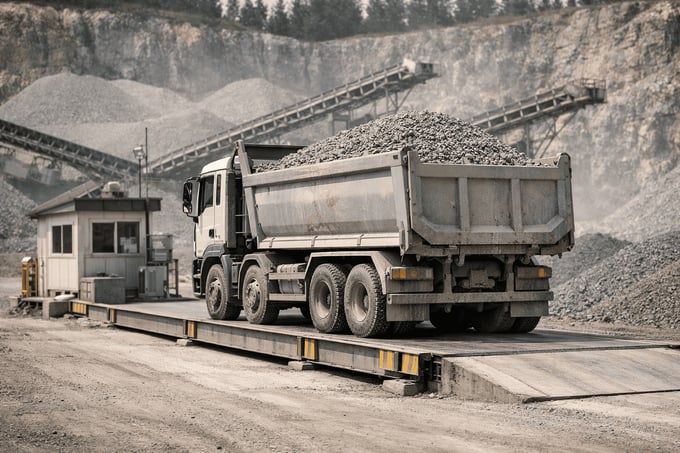
First of all, a quarry in operation can process several thousand tonnes of materials every week: aggregates, sand, and recyclates. Each load has to be identified, weighed, and associated with a customer, a worksite, and a product. At this scale, the slightest weighing error has a direct impact on invoicing and the conformity of declared data. Without digital traceability, managing these volumes quickly becomes unmanageable.
And, unlike in other sectors, in a quarry, weight is the main unit of reference for invoicing and flow control. Weighing determines the amount of each order, the value of transport, and the conformity of deliveries. A poorly calibrated scale, an erroneous entry, or a lost weighing slip, and the entire invoicing chain is compromised.
Added to this are both regulatory and contractual requirements. Compliance with legal metrology for weighing instruments and the ability to provide proof of this (certificates, logbooks, records) are now frequently examined in customer audits and certification procedures.
The construction and public works and waste treatment sectors are also subject to increasingly precise traceability obligations. Inert waste management, recycling monitoring, and environmental declarations all require verifiable, archived, and exportable weighing data.
For quarries concerned, the government platform Trackdéchets now requires the dematerialization of waste tracking slips (BSD) for hazardous waste, as well as the declaration of entry and exit registers for inert waste and excavated soil. All these obligations reinforce the digital traceability requirements that operators must meet.
The limits of manual weighing
In many operations, the weighing process is still based on paper slips filled in by hand, then re-entered into an Excel spreadsheet at the end of the day. This double processing is time-consuming and error-prone: misread figures, inverted columns, misplaced vouchers. The absence of a centralized IT system prevents real-time analysis and makes data auditing extremely tedious.
But without a dedicated management tool, it's complex to automatically associate a weighing operation with a vehicle, a driver, a customer order, or a destination site. Information is scattered between the weighing office, the logistics department, and the accounts department, hampering operational efficiency and creating blind spots in activity monitoring. This compartmentalization is also at the root of the majority of tonnage disputes: without complete, time-stamped traceability, it is very difficult to reach a decision in the event of a dispute.
Manual data entry, voucher verification, and consolidation of daily tonnages therefore require considerable resources. This administrative time is accompanied by a lack of visibility on incoming and outgoing flows: without a centralized dashboard, it is difficult to know at any given time the volumes extracted, stored, or delivered. Production planning and sales management become approximate, and decisions are based on reconstituted data rather than reliable indicators.
How can you ensure reliable traceability of quarry weighing data?
Automate weighing data collection
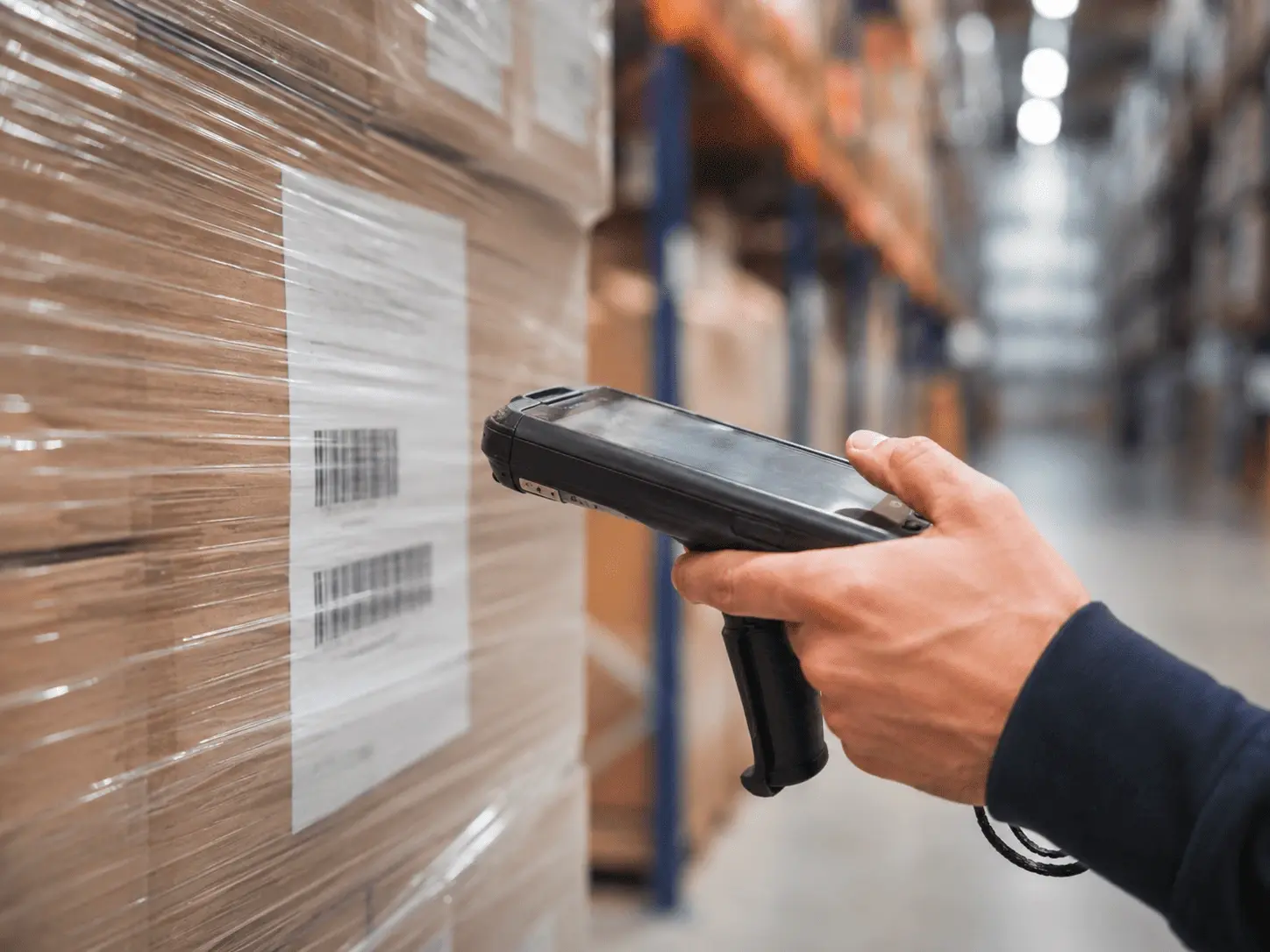
The first level of improvement involves connecting weighbridges and truck scales to a computer system capable of automatically recording each weighing operation. The weight is captured at the source, without manual re-entry, with time-stamping, a unique weighing identifier (DSD), and vehicle identification. This digital weighing eliminates transcription errors and provides a reliable database for invoicing and activity reports.
An entry terminal can incorporate an access control module to identify each vehicle and its driver as soon as they arrive on site. This automatic identification ensures consistency between the weighing, the delivery note, and the associated order, while securing access to the operation. Each vehicle is assigned to a customer, a site (or special condition), and a type of material, automatically generating the documents associated with each operation. What's more, this considerably reduces the processing time for each pass over the truck scale.
Centralize operating information
High-performance quarry management software, such as Sinari Carsabe, centralizes all the information linked to each weighing operation: type of product loaded (aggregate, sand, recycled concrete, etc.), transport vehicle, destination customer, delivery site, time, and date. This centralized system gives every member of the team, whether at the weighing station, in logistics, or in accounting, access to the same data in real time. In this way, information silos are eliminated, as are multiple versions of the same file.
All recorded movements constitute a searchable and exportable history, invaluable for audits and dispute management. In just a few clicks, you can trace the complete history of a truck, a day's production, or a customer delivery, with indisputable time-stamped proof to present in the event of a dispute.
Link weighing and invoicing
By linking the weighbridge directly to the management software and the latter to the invoicing system, the operator eliminates all manual re-entry steps. As soon as a weighing operation is recorded, the system creates the corresponding weighing slip, ready for electronic signature or transmission to the customer. The PDF file of the weighing slip can be sent automatically by e-mail, guaranteeing digital traceability of each transaction and smooth communication with customers. Each piece of data is entered only once, at the source, and automatically circulates throughout the entire IT system.
Concrete benefits for operations
More reliable tonnages and fewer disputes
With a connected weighing system, invoiced tonnages correspond exactly to recorded weighings, with no approximation due to manual data entry. This accuracy improves the quality of commercial relations: customers, knowing that data is reliable and documented, question delivery notes less often. And when a dispute does arise, the operator has a time-stamped history to respond quickly and effectively.
Save administrative time and improve visibility
Reducing errors and eliminating the need for re-entries means substantial time savings for teams. Operators spend less time correcting weighing slips or consolidating tables. For their part, operations managers have access to automated reports offering an up-to-date global view of volumes processed: extracted materials, finished products, recyclates, and recovered waste. This visibility is invaluable for production control, inventory management, and environmental declarations.
Optimizing resources and the production chain
Centralized weighing data can also be used to optimize equipment utilization (loaders, trucks, processing plant) based on objective indicators. Controlling vehicle overloading, detecting weighing anomalies, or monitoring delivery conformity become automated operations. The result is a lasting improvement in the operational efficiency of the entire site.
Digitizing career management to secure all flows
Weighing traceability only reaches its full potential when it forms part of an integrated management chain. Modern weighing software is designed to interface with existing systems (ERP, TMS, WMS, accounting software...) to create a coherent digital ecosystem within the company. From order to delivery, every step is traced, every piece of data is consistent, with no information gaps.
To meet the sector's specific needs, software publishers now offer solutions that integrate all the necessary functionalities: weight management, material traceability, vehicle tracking, automated invoicing, production reports, and access control. Some tools also integrate dynamic weighing functions, loader-mounted weighing systems, or stand-alone data entry terminals for high-traffic sites.
For operators wishing to take the plunge, it is advisable to start by taking stock of their current processes, identifying the most costly sticking points, and then choosing a complete weighing solution capable of evolving with the business. Staff training is a key success factor: a traceability system only reaches its full potential when it is properly adopted by all teams.
Conclusion
Weighing traceability in quarries is no longer a subject reserved for large mining groups. Whatever the size of the operation, digital weighing is now accessible, cost-effective, and indispensable for securing flows, making invoicing more reliable, and meeting the sector's growing requirements. Automation, centralization, and integration: these are the three pillars of modern, high-performance quarry management.
.webp)
.webp)
.webp)
.webp)
.webp)

.webp)