What are you looking for?

On-board computing

In-vehicle computing: training drivers in eco-driving

Posted on 15/05/2026

1 min

Updated on 15/05/2026

Sommaire

Today, on-board computing is an indispensable tool for optimizing the performance and safety of your vehicles. But beyond the classic uses we all instinctively think of, such as route tracking, managing driving and rest times, monitoring fuel consumption, vehicle behavior, etc., it's important to point out that on-board computing has real potential for driver training, particularly in eco-driving. Here are a few explanations.

A wealth of information for trainers

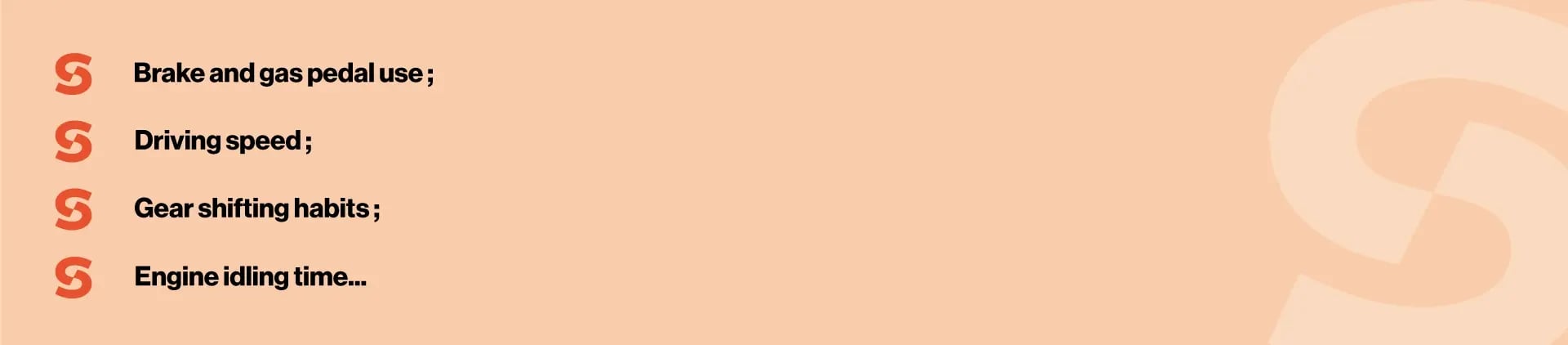
In simple terms ecodriving aims to reduce fuel consumption and GHG emissions (greenhouse gases, including CO²), but also to improve road safety. What role do on-board computers play in all this? The data collected by telematics will give trainers access to detailed information on your drivers' driving habits:
Wealth of information for trainers

Real-time analysis for easier progress

The ability to provide feedback in real time is one of the strong points of on-board computing for training your drivers in eco-driving. Once the best practices have been defined in the telematics tool, drivers are immediately alerted if they fail to respect the principles imposed by eco-driving, enabling them to self-correct independently. This is an undeniable advantage in terms of instilling new driving methods in drivers' minds, without making it too restrictive for them.

A customized training program

The data collected from the on-board computer will form the cornerstone of a personalized eco-driving program for each driver. Tailor-made programs that respond precisely to the specific needs of each driver will ultimately prove far more effective than a lambda program that fails to take into account the strengths and weaknesses of the driver in question.

In conclusion, in-vehicle computing has enormous potential for improving your drivers' training, especially when it comes to eco-driving. By investing fully in eco-driving training, you'll quickly see substantial savings in fuel consumption and vehicle maintenance costs, and you'll also be able to proudly boast a reduced rate of GHG emissions from your transport operations GHG emissions.

To find out more about our on-board computer solutions (central processing unit, touch terminal, mobile application, stand-alone GPS tracker for equipment geolocation), please contact us.
You may also be interested in these articles

On-board computing and eco-driving

On-board computing

15/05/2026

In-vehicle computing: training drivers in eco-driving

Today, on-board computing is an indispensable tool for optimizing the performance and safety of your vehicles. But beyond the classic uses we all instinctively...

Digital refrigerated transport

TMS SME

11/05/2026

Refrigerated transport: Regaining control through digital technology

In the refrigerated transport sector, the daily routine of an operations manager is punctuated by constant pressure. You have to ensure that temperatures are...

Fleet management indicators

FMS

06/05/2026

8 KPIs to Help You Better Manage Your Fleet

In road transport, fleet management is more than just tracking vehicles on a map. It has a direct impact on operational capacity, operating costs, operational...

Digital tachograph data collection

On-board computing

30/04/2026

Collection of digital tachograph data

In the road haulage industry, controlling activity data has become a key operational and regulatory issue. The digital tachograph (or chronotachygraphe...

WMS vs Excel

WMS

27/04/2026

Switching from Excel to WMS: What Are the First Steps for an SME?

Introduction You've been managing your warehouse in Excel for years. It's running smoothly, but at what cost? Between overlapping files, cells erased by...

Planning vs. transport optimization

Optimization

22/04/2026

Transport Planning vs. Transport Optimization: What Are the Differences?

In a transport company, organizing routes is one of the central missions of the operations manager. Every day, they have to distribute orders, assign vehicles,...

Managing logistics peaks

WMS

16/04/2026

Key Metrics: How Does a WMS Secure Your Operations?

Every year, the same periods of high demand recur: Black Friday, Christmas, sales, back-to-school. These seasonal peaks come as no surprise, yet they continue...

Truck fleet availability

FMS

13/04/2026

Heavy-duty truck fleet availability: exceed 95%, optimize profitability

A truck at a standstill generates no sales. It mobilizes capital, disorganizes operations and puts a strain on customer relations. In a European context...

Poor inventory management costs

WMS

08/04/2026

The Hidden Costs of Poor Warehouse Inventory Management

We often think that the main cost of a warehouse is limited to storage: rent, handling, personnel. Yet the biggest losses are elsewhere. Poor inventory...

Reduce truck maintenance costs

FMS

02/04/2026

Reducing Heavy-Duty Truck Maintenance Costs: 5 Strategies (-30%)

An immobilized truck doesn't just cost a workshop invoice: it costs a derailed schedule, unbilled kilometers, an emergency charter... and sometimes a waiting...

Do you want to make your company more efficient?

Do you want to increase productivity, improve profitability, connect more easily with your clients and partners, gain a global view of your KPIs, and reduce your CO2 emissions through digitalisation?