
Summarize this article with:
Sommaire
In a transport company, organizing routes is one of the central missions of the operations manager. Every day, they have to distribute orders, assign vehicles, respect customer constraints and ensure that deliveries can be made on time. This preparatory work directly conditions the fluidity of operations and the company's ability to meet its commitments in a logistics environment where every destination must be reached under the best possible conditions.
In this context, the terms route planning and route optimization are often used as if they were the same thing. However, in practice, many companies talk about optimization when their organization is still based mainly on planning methods: operator experience, manual adjustments and simple tools, even when using route optimization solutions.
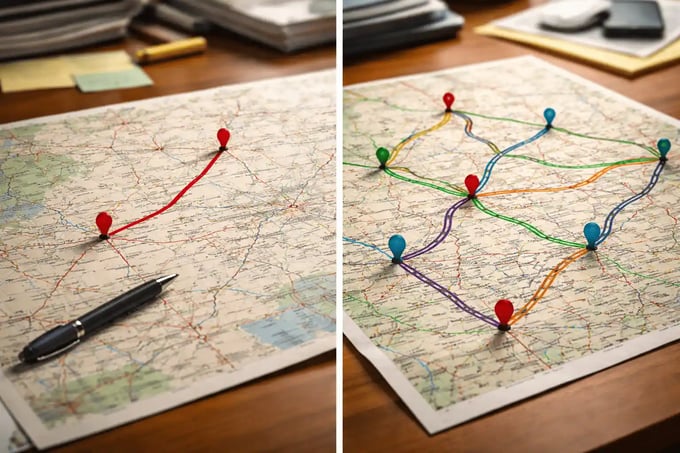
Understanding the difference between planning and transport optimization helps to better structure operations and identify concrete levers for improvement. While planning involves organizing feasible routes, optimization aims to improve efficiency across the whole fleet.
📌 Key takeaways:
Route planning and optimization serve two different purposes:
-
Planning involves organizing routes so that they can be completed on a daily basis (assigning vehicles, determining delivery order, adhering to constraints).
-
Optimization aims to improve these routes to find the most efficient combination possible across the entire fleet.
👉 In summary:
Planning gets the trucks on the road; optimization ensures they operate as efficiently as possible.
Route planning: organizing day-to-day operations
In road transport, route planning involves organizing deliveries or collections. The aim is to build feasible routes, taking into account orders to be processed, available vehicles and operational constraints.
For the operations manager, this stage enables him to allocate tasks to drivers, and to structure the day's operations so that each round can be completed under good service conditions.
Building a feasible tour
Planning begins with the transformation of orders into concrete routes. In particular, the operator must :
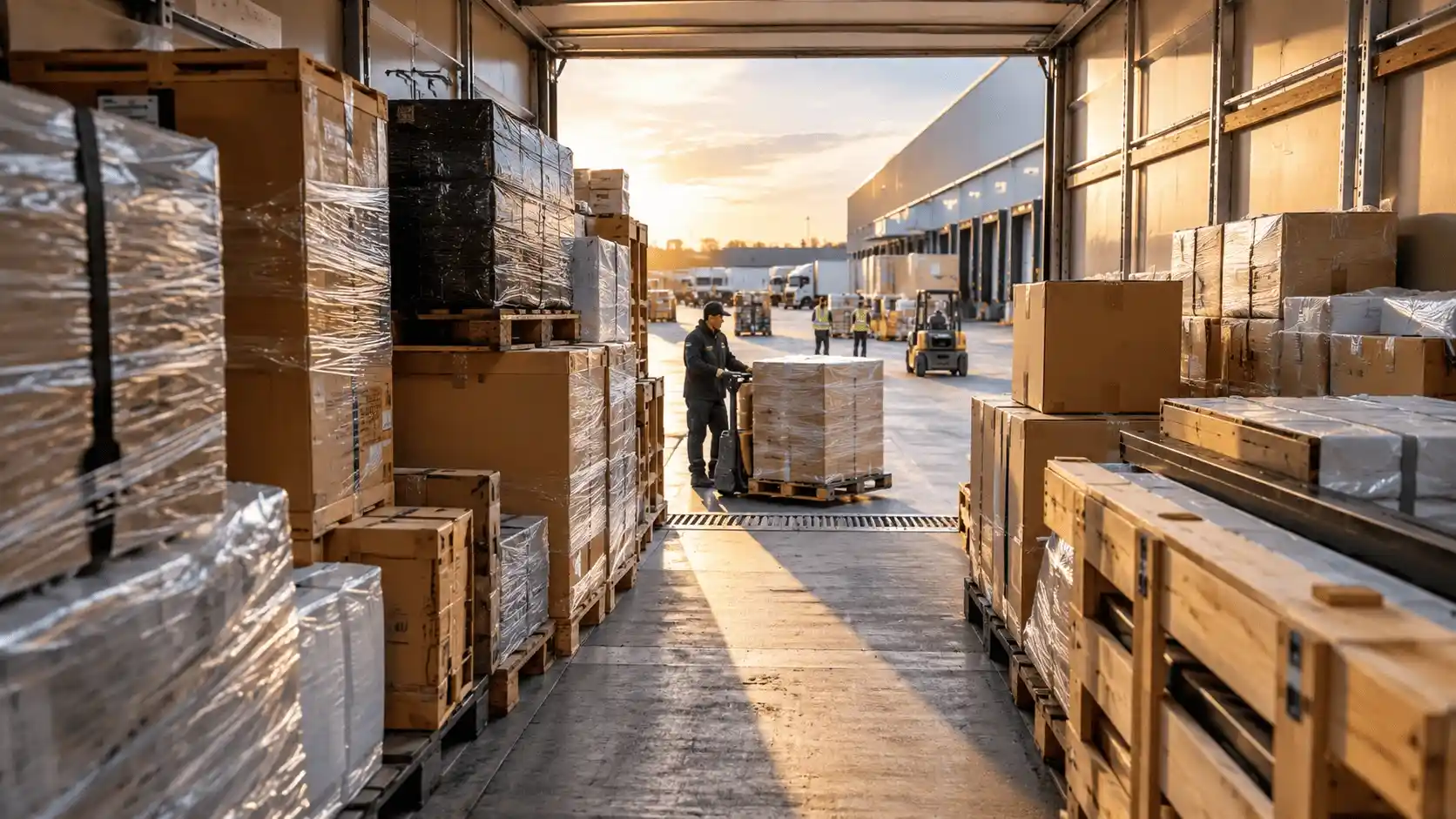
- allocate orders to available vehicles;
- choose the right vehicles according to volumes or types of goods;
- define the order of deliveries to organize the route.
The goal is to create coherent routes that drivers can follow in the field, as detailed in our article “Transport Route Planning: Real Benefits for SMEs.”
Planning constraints
Planning must take several constraints into account
- customer delivery slots ;
- vehicle capacity;
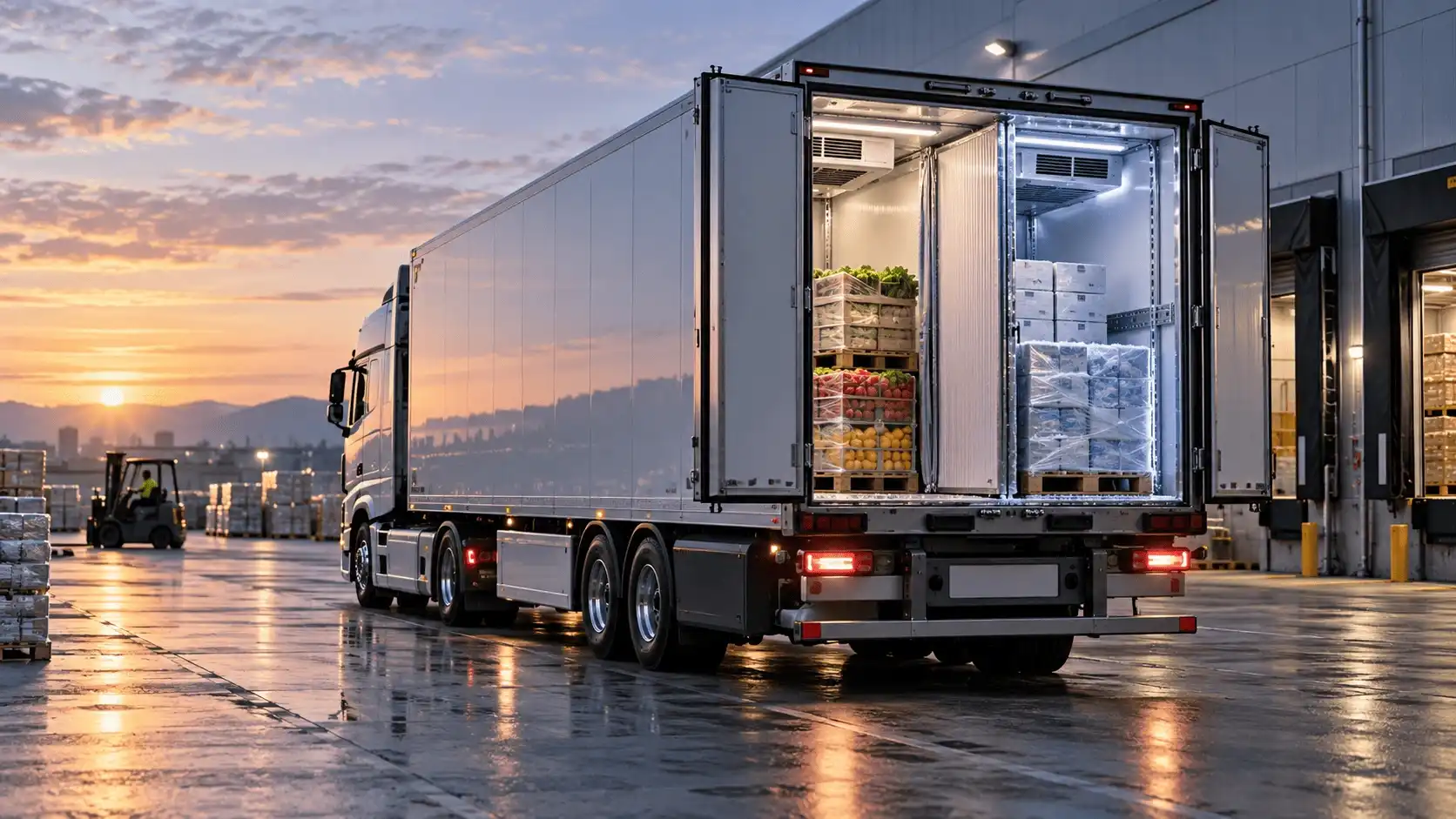
- vehicle types, equipment, compartments, temperatures;
- regulatory driving times;
- distances between delivery points;
- driver availability;
- authorized / prohibited zones.
These elements form part of an operational management process in which each decision can have an impact on the entire transport schedule.
An activity still largely based on experience
In many companies, planning still relies heavily on the experience of operations staff and simple tools, despite best practices.
This human expertise remains essential for organizing day-to-day operations. But it is no guarantee that routes will be as efficient as possible.
Route optimization: seeking the best possible organization
Route optimization aims to improve the existing organization in order to find the most efficient solution possible. Unlike planning, it relies on calculations, specialized software and the analysis of numerous scenarios.
This evolution is in line with the digital transformation of logistics, where technologies enable the analysis of a large number of parameters to improve transport performance.
From a possible route to the most efficient route
Optimization consists in analyzing different combinations in order to identify those that improve overall operating performance. In particular, it seeks to :
- reduce kilometers traveled, times, costs and GHG emissions;
- balance routes between vehicles;
- make better use of the available fleet.
These actions help to avoid frequent imbalances: under-utilized vehicles, excessively long routes or unnecessary kilometers.
The role of specialized tools
Given the complexity of the calculations involved, optimization relies on software capable of testing a large number of combinations.
Solutions such as Sinari Optim optimize routes by taking into account all operational constraints, while offering a global vision of fleet organization.
Planning vs. transport optimization: concrete differences
In practice, planning and optimization pursue different objectives.
| Planning | Optimization |
|---|---|
| Organize routes | Improve routes |
| Experience-based | Analysis-based |
| Tour-by-tour vision | Global fleet vision |
| Build a feasible solution | Identify the most effective solution |
Planning structures day-to-day operations. Optimization then improves performance.
Why planning alone quickly reaches its limits
In most transport companies, planning remains indispensable. However, as operations become more complex, its limits become apparent.
Complexity of multi-delivery routes
The complexity of multi-delivery routes increases with the number of delivery points involved:
- several vehicles in parallel ;
- dozens of customers to serve;
- numerous operational constraints.
The limits of manual methods
When planning is based on manual adjustments, certain problems arise:
- unbalanced routes ;
- empty kilometers or unnecessary detours;
- time-consuming route preparation.
The difficulty of anticipating scenarios
Manual planning makes it difficult to anticipate:
- changes in volumes ;
- new customers ;
- organizational changes.
Testing several scenarios becomes complex.
How optimization transforms route management
Optimization enables concrete improvements in transport organization.
Fewer kilometers and lower costs
By organizing routes in a more coherent way, it becomes possible to limit unnecessary detours and make better use of available vehicles.
More balanced routes
Deliveries are more evenly distributed between vehicles, making operations smoother.
Better visibility
Optimization tools enable you to test different scenarios and adjust route organization in real time.
Planning and optimization: two complementary approaches
Route planning is used to organize day-to-day operations and build feasible routes.
Optimization then comes into play, to analyze different possible organizations and improve overall tour efficiency.
In practice, route management often follows a three-step logic:
1️⃣ Planning
2️⃣ Optimization
3️⃣ Operational adjustment
This combination enables tour organization to be improved while maintaining operational control.
Conclusion
In transport operations, planning and optimization respond to two different but complementary logics. Planning enables the day-to-day organization of routes, while optimization aims to improve this organization through data analysis and software technologies.
For an operations manager, understanding this distinction helps to better structure logistics management and improve transport performance.
In a context of rising costs and increasing operational constraints, route optimization is gradually becoming a major lever for operations managers.
If you'd like to find out more about these solutions, or discover their advantages, you can consult other articles on our blog, or get in touch with our teams to discuss the best logistics tools and practices to adopt in 2026.

.webp)
.webp)
.webp)

.webp)